




What is the material removal rate in CNC turning parts production?
 Aug 25, 2025|
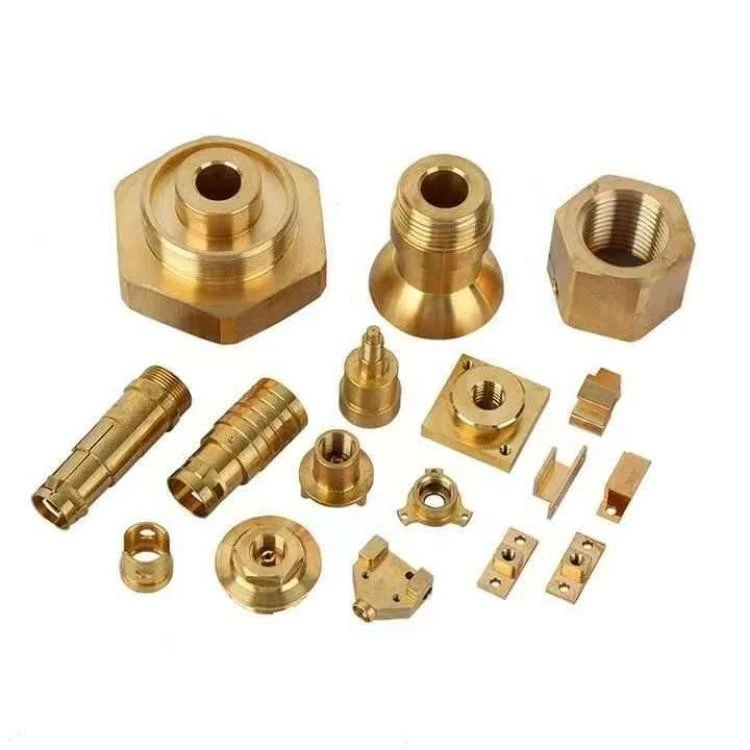
 In the realm of modern manufacturing, CNC (Computer Numerical Control) turning has emerged as a cornerstone process for producing high - precision components. As a dedicated supplier of CNC Turning Parts, I've witnessed firsthand the critical role that the Material Removal Rate (MRR) plays in the efficiency and quality of production. In this blog, we'll delve into what the Material Removal Rate is, its significance in CNC turning parts production, and how it impacts our operations as a supplier.
Understanding the Material Removal Rate
The Material Removal Rate is a fundamental concept in machining. It refers to the volume of material that is removed from the workpiece per unit of time. In the context of CNC turning, which involves rotating the workpiece against a cutting tool to shape it, MRR is typically measured in cubic millimeters per minute (mm³/min) or cubic inches per minute (in³/min).
Mathematically, the MRR can be calculated using the following formula:
[MRR = d\times f\times v]
where (d) is the depth of cut (the distance the cutting tool penetrates into the workpiece), (f) is the feed rate (the distance the tool advances along the workpiece per revolution), and (v) is the cutting speed (the relative speed between the cutting tool and the workpiece).
For example, if we have a depth of cut of 2 mm, a feed rate of 0.2 mm/rev, and a cutting speed of 200 mm/min, the MRR would be:
[MRR=2\times0.2\times200 = 80\space mm^{3}/min]
Significance of MRR in CNC Turning Parts Production
Efficiency
One of the primary reasons why MRR is so important in CNC turning is its direct impact on production efficiency. A higher MRR means that more material can be removed in less time. This translates into shorter machining cycles, which in turn allows us to produce more parts in a given period. As a CNC Turning Parts supplier, this efficiency is crucial for meeting customer demands, especially when dealing with large - scale orders.
Cost - Effectiveness
Efficiency is closely tied to cost - effectiveness. By increasing the MRR, we can reduce the overall machining time, which leads to lower labor costs and machine usage costs. Additionally, a higher MRR can also reduce the number of set - ups and tool changes required, further driving down costs. This cost - saving can be passed on to our customers, making our Precision Machined Parts more competitive in the market.
Tool Life
While a higher MRR can lead to increased efficiency and cost - savings, it also has an impact on tool life. When the MRR is too high, the cutting tool is subjected to greater forces and heat, which can cause it to wear out more quickly. This not only increases tooling costs but can also affect the quality of the machined parts. As a supplier, we need to find the right balance between achieving a high MRR and ensuring a reasonable tool life. This often involves selecting the appropriate cutting tools, optimizing cutting parameters, and using effective cooling and lubrication techniques.
Factors Affecting MRR in CNC Turning
Workpiece Material
The type of material being machined has a significant impact on the MRR. Different materials have different mechanical properties, such as hardness, toughness, and thermal conductivity. For example, machining a soft material like aluminum allows for a higher MRR compared to a hard material like stainless steel. Aluminum has lower hardness and better thermal conductivity, which means that the cutting tool can remove material more easily and dissipate heat more effectively.
Cutting Tool Geometry
The geometry of the cutting tool, including the rake angle, clearance angle, and cutting edge radius, also affects the MRR. A well - designed cutting tool can reduce cutting forces and improve chip formation, allowing for a higher feed rate and depth of cut. For instance, a tool with a positive rake angle can reduce the cutting force, enabling a higher MRR. However, the choice of tool geometry also depends on the workpiece material and the specific machining operation.

Machine Capability
The capabilities of the CNC turning machine, such as its power, torque, and spindle speed, limit the achievable MRR. A machine with higher power and torque can handle larger depths of cut and higher feed rates, resulting in a higher MRR. Additionally, the spindle speed affects the cutting speed, which is a key component of the MRR formula. As a CNC Turning Parts supplier, we invest in high - quality machines to ensure that we can achieve optimal MRR for different types of parts.
Optimizing MRR in Our Production Process
As a supplier of CNC Turning Parts, we continuously strive to optimize the MRR in our production process. Here are some of the strategies we employ:
Process Planning
Before starting the machining process, we carefully plan the cutting parameters based on the workpiece material, part geometry, and machine capabilities. We use advanced software to simulate the machining process and calculate the optimal MRR. This helps us to avoid over - or under - machining and ensures that we can achieve the highest possible efficiency without compromising on quality.
Tool Selection
We select cutting tools that are specifically designed for the workpiece material and the machining operation. We work closely with tool manufacturers to stay updated on the latest tooling technologies and select the most suitable tools for our production. For example, for machining hard materials, we use high - performance carbide tools with advanced coatings to improve tool life and MRR.
Quality Control
Throughout the machining process, we implement strict quality control measures to ensure that the parts meet the required specifications. We use in - process inspection techniques to monitor the MRR and make adjustments as needed. This helps us to detect and correct any issues early on, ensuring that we can produce high - quality Precision Machined Parts consistently.
Comparison with Other Machining Processes
When comparing CNC turning with other machining processes like CNC Milling Parts production, the concept of MRR still holds importance. However, the way MRR is calculated and optimized can differ. In CNC milling, the cutting tool moves in multiple directions, and the material removal is more complex compared to CNC turning. The MRR in milling depends on factors such as the number of teeth on the cutter, the width of cut, and the axial depth of cut.
In general, CNC turning is more suitable for producing cylindrical or round parts, and it can often achieve a relatively high MRR for these types of parts. On the other hand, CNC milling is better for producing parts with complex shapes and features, but achieving a high MRR in milling may require more sophisticated toolpath planning and cutting strategies.
Conclusion
The Material Removal Rate is a critical factor in CNC turning parts production. It affects the efficiency, cost - effectiveness, and quality of the parts we produce. As a CNC Turning Parts supplier, we understand the importance of optimizing the MRR to meet the diverse needs of our customers. By carefully considering factors such as workpiece material, cutting tool geometry, and machine capabilities, and by implementing effective optimization strategies, we can achieve a balance between high MRR and high - quality production.
If you are in need of high - quality CNC Turning Parts or Precision Machined Parts, we invite you to contact us for a detailed discussion. Our team of experts is ready to work with you to understand your requirements and provide the best solutions for your projects.
References
- Kalpakjian, S., & Schmid, S. R. (2014). Manufacturing Engineering and Technology. Pearson.
- Boothroyd, G., Dewhurst, P., & Knight, W. A. (2011). Product Design for Manufacture and Assembly. CRC Press.