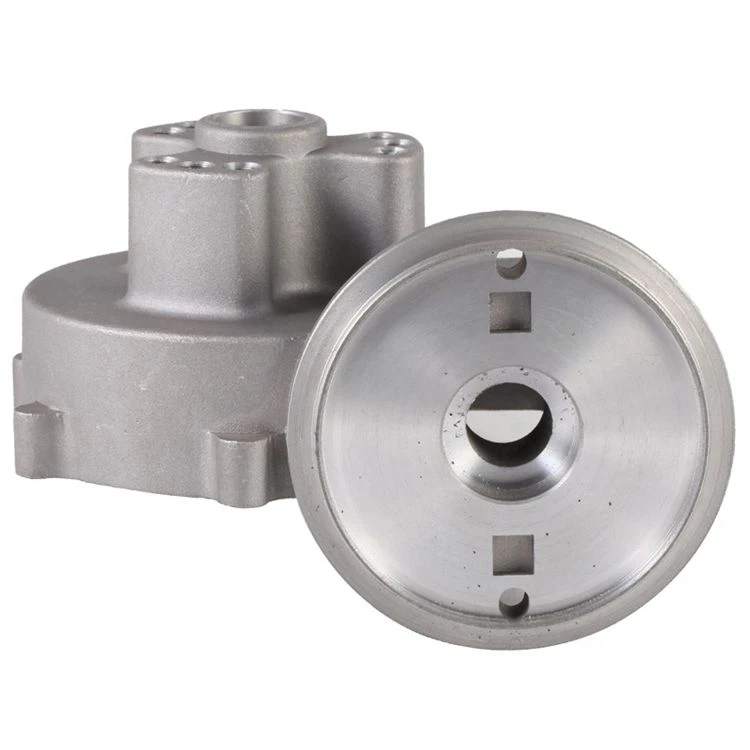
Sand Casting

Your Professional Sand Casting Supplier!


Qingdao Ruixinyang Machinery Co. Ltd are a professional mechanical processing factory with advanced processing equipment and professional processing technologies, able to provide customers with high-quality processing services. we have a complete set of mechanical processes that can be customized (OEM or ODM) according to customers' technical drawings or samples. We mainly supply all kinds of machinery parts and whole sets, such as all types of water pumps, vacuum pumps, valve components, and whole sets; as well as all kinds of metal plates and mechanical castings for domestic use and about 24 foreign countries. We are the long-term stable supplier of Grundfos.


Why Choose Us

Quality Control

Our foundry strictly adheres to the ISO 9001 quality management system, and all products are certified to international standards such as CE and TUV.


Advanced Equipment

We are equipped with a comprehensive range of processing equipment, including CNC machining centers, lathes, drilling machines, grinders, fully automatic molding machines, advanced machining centers, surface treatment lines, assembly lines, and packaging lines.

Customization

We have a comprehensive foundry process and can provide customized production based on customer-provided technical drawings or samples. Through a variety of process methods, we can achieve different casting effects and standards (OEM or ODM) to meet our customers' individual needs.

Extensive Experience

With over 15 years of industry experience, all our processing technicians are professionally trained and have extensive practical experience, enabling them to complete various processing tasks efficiently and accurately. Our production team has an average length of service of over 6 years, and our annual production capacity reaches 100,000 tons.


Specification


Single piece weight

0.3kg -8 tons (maximum casting weight: 12 tons)

Overall dimensions

Φ30mm- 4.5m (Split casting for super-large parts)

Wall thickness capacity

4mm (minimum) -150mm (uniform wall thickness)

Pouring temperature

1380-1450℃

Sample production cycle

7-15 days (depending on complexity)

Production cycle

25-35 days (depending on the batch size)

Surface treatment

Sandblasting/anti-rust coating/machining


Pros of Sand Casting
1

Extremely low tooling cost

Because the sand material can be easily formed into a mold, used, broken and re-used, sand casting has a minimal cost of tooling compared to similar processes.

2

Unparalleled part versatility

The limits of sand casting are, in general, only dictated by what type of patterns can be created. Because patterns can be made from a variety of materials (including wood, plastic or metal) and can be intricately detailed, sand casting is suitable for complex pieces as well as simpler forms.

3

Short lead times

Lead times for sand casting are very short (in part because of the ease of creating tooling). Do keep in mind that, depending on the finish required, additional machining is often necessary for sand cast parts.

4

Suitability for low quantities

Low tooling costs and fast turnaround mean that sand casting is an ideal cost-effective process for small-quantity runs, even as low as a single piece. This makes it useful for prototyping and one-off production.


Types of Sand Used in Sand Casting


Machined Sand Casting Parts

Sand Type One: Green Sand

Green sand isn't actually green in color but refers to being uncured or essentially raw. Green sand molds are sand combined with water and bonding compounds to produce what is essentially clay. This type of sand is easily reused, which translates to lower costs. It is straightforward to create the molds for casting. Risk comes into play due to the malleable nature of green sand.

Sand Casting Components

Sand Type Two: Water Glass or Sodium Silicate

Water glass or sodium silicate is great in casting applications that require a cavity. Sodium silicate provides a quality mold that allows for higher tolerances. Parts with increased complexity, cavities, dimensional needs, and fantastic surface finish specifications make for a great fit. Water glass requires a mixture of ingredients to ensure the core can break down.

Ductile Iron Sand Casting

Sand Type Three: Furan Resin Sand

Furan resin sand is the third most common type of sand casting material. A resin mold comprises quartz sand and resin sand. When mixed and heated, resin sand hardens into a durable, smooth mold. The likelihood of a casting breaking down is greatly diminished, but it comes with a higher price point and lead time. Furan resin sand molds are more labor intensive since they must be mixed and heated individually. This is not a quick method of casting.


The Sand Casting Process
 
01/

Materials Needed
To start the sand casting process, several materials are required, such as sand, a binder, various additives, molten metal, the pattern, and other casting tools. The sand serves as the primary molding material, while the binder holds the sand particles together. Additives such as clay, coal dust, or organic compounds are used to enhance the mold's strength and permeability.

02/

Creating the Pattern
The first step in sand casting involves creating a pattern, which is a replica of the desired metal component. One can make patterns from wood, plastics, or metals. The pattern is typically larger than the final product to accommodate shrinkage during cooling.

03/

Creating the Sand Casting Mold
The pattern is embedded in the sand to create a mold. The mold consists of two halves, known as the cope and drag. These halves are separated to remove the pattern and allow for the pouring of molten metal.

04/

Pouring the Molten Metal
Once the mold is prepared, molten metal is poured into the cavity created by the pattern. The metal is typically heated in a furnace and then transferred to a pouring ladle for controlled pouring into the mold. Different metals are used for different end uses. A few commonly used metals include steel, brass, aluminum, and iron.

05/

Cooling and Shakeout
After the molten metal is poured, it cools and solidifies within the mold. Cooling time varies depending on the size and complexity of the casting– larger objects will take longer to cool compared to small objects. Proper cooling is essential to achieve the desired properties and dimensional accuracy of the final product, while also enabling safe handling of the pieces downstream.

06/

Recycling the Sand
One of the advantages of sand casting is the ability to reuse the molding sand. After the shakeout, the sand is separated from the casting and can be recycled for future use. The sand is reconditioned and processed to restore its properties for subsequent casting cycles.


Materials in Sand Casting


Aluminum
Aluminum encompasses a variety of alloys that are lightweight, machinable, and offer strength comparable to mild steel while being less dense. Its favorable properties for casting include excellent castability, low density, and high corrosion resistance.


Bronze
As with aluminum, bronze is a term used to describe several alloys of copper and tin that are altered by the percentage of copper, the percentage of tin, and the addition of other alloys such as aluminum, zinc, nickel, and iron. The three types of bronze used for sand casting are aluminum bronze, manganese bronze, and silicon bronze.


Brass
Brass, an alloy of copper and zinc, varies in properties based on the proportions of these metals, affecting its characteristics and appearance. Its resistance to rust and corrosion is attributed to the absence of iron or iron oxide, combined with the zinc and copper content.


Zinc
Zinc sand casting enables the production of components with thinner walls, fewer draft angles, and long, narrow holes. Zinc is alloyed with copper, aluminum, and magnesium to enhance its strength, rigidity, castability, and toughness. While zinc is easier to work with than aluminum, it is approximately two and a half times heavier. Like aluminum, zinc offers excellent corrosion resistance.


Lead
It is a heavy metal known for its corrosion resistance. However, the use of lead in sand casting requires careful handling due to health risks associated with inhalation. Many countries have established standards to limit the amount of lead used in manufacturing.


Copper
Copper is typically alloyed with other metals to improve its mechanical and physical properties. While stronger and more expensive than aluminum, copper offers high tensile strength and excellent electrical and thermal conductivity. Its resistance to corrosion makes it suitable for a wide range of products.


Iron
Iron is well-suited for casting due to its fluidity, low volume shrinkage, and minimal linear shrinkage. Despite its poor mechanical properties, with compressive strength significantly higher than tensile strength, iron is favored for creating complex shapes, asymmetric structures, and intricate parts.


Mild Steel
Mild steel is a low carbon steel composed of iron, carbon, and other elements. With a carbon content ranging from 0.15% to 0.30%, it is highly malleable and ductile. Increasing the carbon content enhances its hardness, strength, and hardenability.


Stainless Steel
Stainless steel is a popular choice for sand casting due to its exceptional properties, including resistance to corrosion, durability, and strength.


Alloy Steel
Alloy steel is produced by combining carbon steel with elements such as cobalt, chromium, manganese, nickel, tungsten, molybdenum, or vanadium. These alloying elements modify the steel's strength, hardness, and corrosion resistance.


Machined Sand Casting Parts


Applications of Sand Casting

The applications of sand casting are:
● Pump bodies
● Bearings
● Bushings
● Air compressor pistons
● Impellers
● Electronic equipment
● Engine crankcases
● Fittings
● Engine oil pans
● Gears
● Flywheel castings
● Gas and oil tanks
● Machine parts


Customized Process


Make a request

Make the drawings

Engineer's confirmation

Develop molds

Quality control


Laboratory testing

Sample confirmation

Mass production

Packaging

Shipment


Our Service


● If you need custom products, first we need open the grinding tool according to your technical drawing, then we produce the sample for your check.
● If it's OK for you, then we start mass production, and every product will go through staff-check, Inspection visits, and final detection, that's to say 100% check not spot-check.
● All products has a one-year warranty period.
● And we offer 24x7 service during pre sales, mid sales, and post sales.


Packaging and Shipping


Packaging depends on the mold, parts and customer requirements.
Proper packaging and professional couriers will ensure fast and good delivery of goods. 


productcate-1-1

productcate-1-1


Our Certificate


productcate-1-1


FAQ

Q: What is sand casting and how does it work?s

A: Sand casting involves the pouring of molten metal into a cavity-shaped sand mould where it solidifies. The mould is made of sand particles held together with an inorganic binding agent. After the metal has cooled to room temperature, the sand mould is broken open to remove the casting.

Q: What are the advantages of sand casting?

A: Sand casting offers several remarkable advantages for manufacturing custom metal parts: unparalleled design flexibility, a vast array of material choices, and cost-effectiveness in tooling.

Q: What are the four stages of sand casting?

A: Place a pattern in sand to create a mold.
Incorporate the pattern and sand in a gating system. Remove the pattern.
Fill the mold cavity with molten metal.
Allow the metal to cool.
Break away the sand mold and remove the casting.

Q: What are the three types of sand casting?

A: Green sand is the quickest and most efficient method, followed by water glass or sodium silicate casting. Furan resin sand is a balance between both offering higher dimensional tolerances in the initial cast but trading off for time and money.

We're professional sand casting manufacturers and suppliers in China, specialized in providing high quality customized service. Be free to wholesale discount sand casting for sale here and get quotation from our factory. For price consultation, contact us.

(0/10)

clearall