




What is the hardness requirement for CNC milling parts?
 Jan 21, 2026|
 Hey there! As a supplier of CNC Milling Parts, I often get asked about the hardness requirements for these parts. You might be wondering, why is hardness so important? Well, it plays a huge role in how well these parts perform in various applications.
First off, let's understand what hardness means in the context of CNC milling parts. Hardness is basically a measure of a material's resistance to local deformation, like indentation, scratching, or wear. In the case of CNC milling, the right hardness is crucial for the part to stand up to the machining process itself and then perform its intended function effectively.
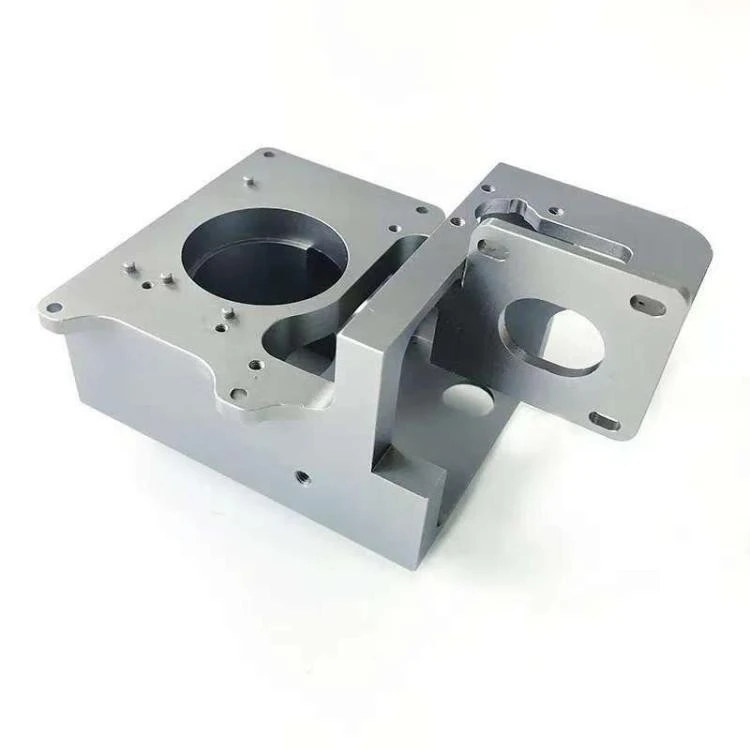

When it comes to the actual hardness requirements, it varies a lot depending on the application. For example, in the automotive industry, parts like engine components need to be quite hard. The high temperatures and pressures inside an engine mean that parts can face a ton of wear and tear. So, for these types of automotive CNC Milling Parts, we're talking about a relatively high hardness value. This ensures that the parts won't deform easily and can maintain their shape and performance over a long time.
On the other hand, if we're looking at parts for consumer electronics, the hardness requirements might be different. These parts often need to be lightweight and might not face as much mechanical stress as engine components. However, they still need to be hard enough to resist scratches and minor impacts. Take a look at Precision Machined Parts used in smartphones. The outer casing and internal components need to be durable without adding too much weight. So, we select materials with a hardness that strikes the right balance.
The choice of material also has a big impact on the hardness of CNC milling parts. One of the most common materials we use is aluminum. Aluminum is great because it's lightweight, corrosion-resistant, and relatively easy to machine. But the hardness of aluminum can vary depending on the alloy and the treatment it goes through. For Aluminum Heat Sink Machining, we might use an aluminum alloy with a specific hardness to ensure that the heat sink can dissipate heat efficiently while also being sturdy enough to handle different environments.
Steel is another popular material, and it's known for its high hardness and strength. Different types of steel, like stainless steel or carbon steel, have different hardness levels. Stainless steel is often used when corrosion resistance is a top priority, while carbon steel can be heat-treated to achieve extremely high hardness, making it suitable for high-stress applications.
Now, let's talk about how we measure the hardness of these parts. There are several methods, but two of the most common ones are the Rockwell and Brinell hardness tests. The Rockwell test is pretty quick and involves pressing an indenter into the material and measuring the depth of the indentation. The Brinell test is a bit more involved and measures the diameter of an indentation made by a spherical indenter. Both tests give us a numerical value that helps us determine if the part meets the required hardness specifications.
Controlling the hardness during the CNC milling process is also a key aspect. If the material is too hard, it can cause excessive wear on the cutting tools, leading to increased costs and a lower quality finish. On the other hand, if the material is too soft, the part might deform during machining, resulting in inaccurate dimensions. So, we need to find the sweet spot.
One way we control hardness is through heat treatment. This process involves heating and cooling the material in a controlled way to change its microstructure and, in turn, its hardness. For example, quenching and tempering can significantly increase the hardness of steel parts. We also pay close attention to the cutting parameters during milling, like the cutting speed, feed rate, and depth of cut. These parameters can affect how the material responds to the machining process and can help us maintain the desired hardness.
In addition to the application and material, the design of the part also influences the hardness requirements. Parts with complex geometries might require a different hardness compared to simple, flat parts. For instance, a part with thin walls might need to be softer to prevent cracking during machining, while a thick, solid part can withstand a higher hardness.
Another factor to consider is the surface finish of the part. A hard surface can provide better wear resistance and a smoother finish. But achieving the right surface hardness requires careful control of the machining process and any post-machining treatments.
As a CNC Milling Parts supplier, we work closely with our customers to understand their specific hardness requirements. We use our experience and expertise to select the right materials, choose the appropriate machining processes, and perform the necessary quality checks to ensure that the parts meet the standards.
If you're in the market for high-quality CNC milling parts and have specific hardness requirements, don't hesitate to reach out to us. We're here to help you find the perfect solution for your project. Whether you need parts for automotive, electronics, or any other industry, we've got the knowledge and skills to deliver parts that meet your exact needs. Let's start a conversation and see how we can work together to bring your ideas to life.
References
- "Materials Science and Engineering: An Introduction" by William D. Callister Jr. and David G. Rethwisch
- "CNC Machining Handbook" by Mark J. Hatch