




Which is better, cast iron or steel v belt pulleys?
 Sep 25, 2025|
 When it comes to V belt pulleys, one of the most common questions we, as a V belt pulley supplier, encounter is: "Which is better, cast iron or steel V belt pulleys?" Both materials have their unique characteristics, advantages, and disadvantages, and the choice between them depends on a variety of factors. In this blog post, we'll delve into the details of cast iron and steel V belt pulleys to help you make an informed decision.
Properties of Cast Iron V Belt Pulleys
Cast iron is a popular material for V belt pulleys due to its distinct properties. First and foremost, cast iron is known for its excellent damping capacity. This means that it can absorb vibrations and noise effectively. In industrial settings where noise reduction is crucial, cast iron V belt pulleys can be a great choice. For example, in a factory environment where multiple machines are running simultaneously, the use of cast iron pulleys can help create a quieter working environment.
Another advantage of cast iron is its high wear resistance. Cast iron contains graphite flakes, which act as a solid lubricant. This reduces friction between the belt and the pulley, resulting in less wear and tear on both the belt and the pulley itself. As a result, cast iron V belt pulleys can have a relatively long service life, especially in applications where the belts are under constant stress.
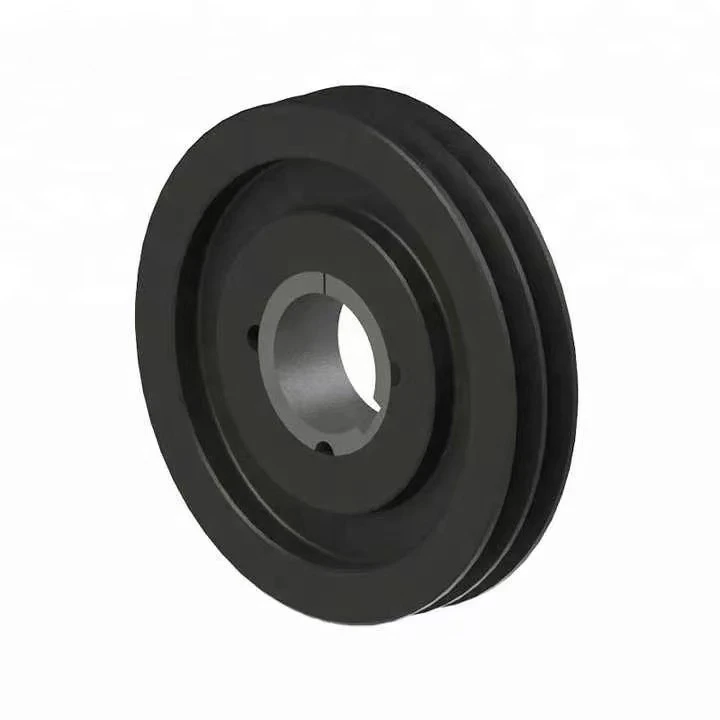
Cast iron is also relatively easy to cast into complex shapes. This allows for the production of V belt pulleys with intricate designs, such as Dual Groove Belt Pulley. Dual groove pulleys can transmit power more efficiently by using two belts simultaneously, and the casting process makes it possible to manufacture these pulleys with high precision.
However, cast iron also has some drawbacks. It is a brittle material, which means it is more prone to cracking or breaking under high impact loads. In applications where the pulley may be subject to sudden shocks or heavy impacts, such as in some construction equipment, cast iron pulleys may not be the best option. Additionally, cast iron is relatively heavy compared to steel, which can add to the overall weight of the machinery and increase energy consumption.
Properties of Steel V Belt Pulleys
Steel V belt pulleys, on the other hand, offer a different set of properties. Steel is known for its high strength and toughness. It can withstand high impact loads without cracking or breaking easily. This makes steel pulleys suitable for applications where the pulley is exposed to harsh operating conditions, such as in mining or heavy machinery.
Steel is also more ductile than cast iron. Ductility means that steel can be deformed plastically without fracturing. This property allows steel pulleys to be formed into various shapes through processes such as machining. For example, Machined Pulley With Keyway can be precisely machined from steel to ensure a perfect fit with the shaft. The keyway provides a positive connection between the pulley and the shaft, preventing slippage and ensuring efficient power transmission.
In addition to its mechanical properties, steel has a relatively low weight compared to cast iron. This can be beneficial in applications where weight reduction is important, such as in automotive engines or aerospace equipment. A lighter pulley can reduce the overall weight of the system, which in turn can improve fuel efficiency and performance.
However, steel also has its limitations. Steel is more prone to corrosion than cast iron, especially in environments with high humidity or exposure to chemicals. To prevent corrosion, steel pulleys often need to be coated or treated with anti - corrosion materials, which can add to the cost.
Applications of Cast Iron and Steel V Belt Pulleys
The choice between cast iron and steel V belt pulleys largely depends on the specific application.
In general, cast iron V belt pulleys are commonly used in applications where noise reduction, wear resistance, and cost - effectiveness are the main concerns. They are widely used in industrial machinery such as conveyor systems, pumps, and fans. For example, in a conveyor system that transports light to medium - weight goods, the low noise and long - lasting performance of cast iron pulleys make them an ideal choice.
Steel V belt pulleys, on the other hand, are preferred in applications where high strength, toughness, and weight reduction are crucial. They are often used in heavy - duty machinery, automotive engines, and aerospace applications. In an automotive engine, the high - strength steel pulleys can withstand the high - speed rotation and the forces generated by the engine, while the relatively low weight helps to improve the overall performance of the vehicle.
Cost Considerations
Cost is another important factor when choosing between cast iron and steel V belt pulleys. Cast iron is generally less expensive than steel. The raw material cost of cast iron is lower, and the casting process is relatively simple and cost - effective. This makes cast iron pulleys a more budget - friendly option for many applications, especially in industries where cost control is a top priority.
However, when considering the total cost of ownership, other factors such as maintenance, replacement, and energy consumption also need to be taken into account. For example, although steel pulleys may have a higher initial cost, their longer service life and lower energy consumption in some applications may offset the initial investment over time.
Conclusion
In conclusion, there is no one - size - fits - all answer to the question of whether cast iron or steel V belt pulleys are better. Each material has its own advantages and disadvantages, and the choice depends on the specific requirements of the application, including factors such as operating conditions, load requirements, noise levels, and cost.
If you are in the market for V belt pulleys and need further guidance on which material is best for your needs, we, as a V belt pulley supplier, are here to help. Our team of experts can provide you with detailed information and advice based on your specific application. Whether you need a Dual Groove Belt Pulley, a Machined Pulley With Keyway, or an Industrial V Groove Pulley, we can offer high - quality products tailored to your requirements.
Contact us today to start a procurement discussion and find the perfect V belt pulleys for your machinery.
References
- "Materials Science and Engineering: An Introduction" by William D. Callister Jr. and David G. Rethwisch
- "Mechanical Design of Machine Elements and Machines: A Failure Prevention Perspective" by Jack A. Collins, Shigley, and Charles R. Mischke