




What is the difference between open - die forging and closed - die forging for parts?
 Dec 19, 2025|
 As a forging part supplier, I've witnessed firsthand the distinct characteristics and applications of open - die forging and closed - die forging. These two forging methods play crucial roles in the manufacturing of various parts, each with its own set of advantages and limitations. In this blog, I'll delve into the differences between open - die forging and closed - die forging to help you make informed decisions when sourcing forging parts.
1. Basic Definitions
Open - die forging, also known as free forging, is a process where the metal is deformed between flat or simple - shaped dies without completely confining the metal. The workpiece is manipulated manually or with the help of machinery to achieve the desired shape. This method allows for a high degree of flexibility in terms of the size and shape of the final product.
Closed - die forging, on the other hand, involves placing the metal blank in a die cavity that has the exact shape of the desired part. As the dies come together, the metal is forced to fill the cavity, taking on the shape of the die. This process is highly precise and is often used for mass - producing complex parts.
2. Shape Complexity
One of the most significant differences between open - die forging and closed - die forging lies in the complexity of the shapes they can produce.
- Open - die forging: It is suitable for creating relatively simple shapes such as shafts, bars, and discs. The lack of a fully - enclosed die means that the metal is free to flow in multiple directions, making it difficult to achieve highly detailed or intricate shapes. However, it excels at producing large - scale, simple - shaped components. For example, Open Die Forging Shaft is a classic product made through open - die forging. The process can easily adjust the diameter and length of the shaft according to specific requirements.
- Closed - die forging: This method is ideal for manufacturing parts with complex geometries, including gears, connecting rods, and turbine blades. The die cavity precisely defines the shape of the part, allowing for the creation of features such as holes, recesses, and contours. For instance, high - precision components like those in aerospace applications often require the accuracy and complexity that closed - die forging can offer. You can explore more about High - Precision Metal Components on our website.
3. Dimensional Accuracy
Dimensional accuracy is another key factor that differentiates these two forging processes.

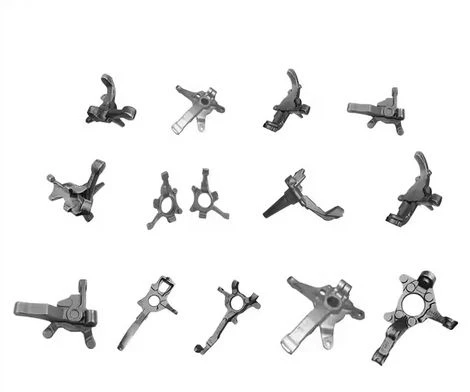
- Open - die forging: Due to the nature of the process, where the metal is not fully constrained, open - die forging generally has lower dimensional accuracy compared to closed - die forging. Tolerances are typically in the range of ±0.5 - 1.5 mm, depending on the size and complexity of the part. Post - forging machining operations are often required to achieve the final desired dimensions.
- Closed - die forging: This process can achieve much higher dimensional accuracy, with tolerances as low as ±0.1 - 0.3 mm. The pre - designed die cavity ensures that the part is formed precisely to the specified dimensions, reducing the need for extensive machining. This makes closed - die forging a cost - effective option for parts that require tight tolerances.
4. Material Utilization
Material utilization is an important consideration from both a cost and environmental perspective.
- Open - die forging: In open - die forging, a relatively large amount of excess material is often required to ensure that the metal can be deformed into the desired shape. This results in lower material utilization rates, typically around 60 - 70%. The excess material, known as flash, needs to be removed through machining, which adds to the production cost and time.
- Closed - die forging: Closed - die forging generally has higher material utilization rates, often exceeding 80%. The die cavity is designed to closely match the final shape of the part, minimizing the amount of excess material. This not only reduces material waste but also lowers the overall production cost.
5. Production Volume
The production volume requirements also influence the choice between open - die forging and closed - die forging.
- Open - die forging: It is well - suited for low - volume production or custom - made parts. The setup time for open - die forging is relatively short, as there is no need to create complex dies. This makes it a cost - effective option for producing small batches of parts with unique specifications. For example, if you need a limited number of Hot Forged Steel Part for a specific project, open - die forging can be a viable choice.
- Closed - die forging: Closed - die forging is more suitable for high - volume production. Although the initial cost of die manufacturing is high, the cost per part decreases significantly as the production volume increases. The high - speed and repeatability of the process make it ideal for mass - producing identical parts.
6. Mechanical Properties
The forging process can have a significant impact on the mechanical properties of the final part.
- Open - die forging: Open - die forging typically results in a more uniform grain structure throughout the part. The repeated deformation of the metal during the forging process refines the grain size, improving the mechanical properties such as strength, toughness, and fatigue resistance. These properties make open - die forged parts suitable for applications where high - performance is required, such as in the automotive and construction industries.
- Closed - die forging: Closed - die forging also enhances the mechanical properties of the part, but the grain flow is more controlled by the shape of the die cavity. This can lead to directional properties, where the strength and other mechanical characteristics vary depending on the orientation of the part. In some cases, this directional property can be advantageous, especially when the part is designed to withstand loads in specific directions.
7. Cost Considerations
Cost is always a major factor in the decision - making process for part sourcing.
- Open - die forging: The initial setup cost for open - die forging is relatively low, as there is no need for expensive die manufacturing. However, the cost per part can be higher for large - scale production due to lower material utilization and the need for additional machining. It is most cost - effective for low - volume, simple - shaped parts.
- Closed - die forging: The upfront cost of die manufacturing for closed - die forging can be substantial. However, for high - volume production, the cost per part is significantly reduced due to higher material utilization and less machining. It becomes a more economical option when producing a large number of complex parts.
Conclusion
In summary, open - die forging and closed - die forging are two distinct processes with their own unique advantages and applications. Open - die forging is best suited for low - volume, simple - shaped parts that require high strength and flexibility in design. Closed - die forging, on the other hand, is ideal for high - volume production of complex parts with tight dimensional tolerances.
As a forging part supplier, we have the expertise and capabilities to provide both open - die and closed - die forging services. Whether you need a single custom - made part or a large - scale production run, we can offer solutions tailored to your specific requirements. If you are interested in our forging parts or have any questions, please feel free to contact us for a detailed discussion. We look forward to partnering with you to meet your forging needs.
References
- "Forging Handbook: Principles and Applications" by ASM International
- "Metal Forming: Processes and Analysis" by Dieter, G. E.
- Industry reports on forging technology and manufacturing trends.