




What is the definition of forging part?
 Dec 05, 2025|
 Forging is a manufacturing process involving the shaping of metal using localized compressive forces. The forging process dates back to ancient times when blacksmiths used hammers to shape metal. Over the years, the forging technology has advanced significantly, and today, it is a highly sophisticated process used in various industries. As a forging part supplier, I am well - versed in the intricacies of forging parts and their definitions.
Basic Definition of Forging Part
A forging part is a metal component that is produced through the forging process. In forging, metal is heated to a malleable state and then shaped by applying pressure. This pressure can be exerted through hammers, presses, or other forging equipment. The resulting forging part has a dense and uniform grain structure, which gives it excellent mechanical properties such as high strength, toughness, and resistance to fatigue.
There are two main types of forging processes: hot forging and cold forging. Hot forging is carried out at temperatures above the recrystallization temperature of the metal. At these high temperatures, the metal is more ductile, and large deformations can be achieved with relatively low forces. Cold forging, on the other hand, is performed at room temperature or slightly elevated temperatures. Cold - forged parts generally have better surface finish and dimensional accuracy compared to hot - forged parts, but they require higher forces for deformation.
Characteristics of Forging Parts
One of the key characteristics of forging parts is their superior strength. The forging process aligns the grain structure of the metal in the direction of the applied force, which results in a part with enhanced strength along the grain flow. This makes forging parts ideal for applications where high strength and reliability are required, such as in automotive, aerospace, and heavy machinery industries.
Forging parts also have excellent fatigue resistance. Fatigue is the weakening of a material caused by cyclic loading. The uniform grain structure and absence of internal defects in forging parts make them less prone to fatigue failure. This is crucial in applications where the parts are subjected to repeated stress, such as in engine components and suspension systems.
Another advantage of forging parts is their high - quality surface finish. Modern forging techniques can produce parts with smooth surfaces, reducing the need for additional machining operations. This not only saves time and cost but also improves the overall quality of the final product.
Types of Forging Parts
There are numerous types of forging parts, each designed for specific applications. Some common types include Hot Forged Steel Part, Closed Die Forging Component, and Drop Forged Bracket.
Hot forged steel parts are widely used in the automotive and construction industries. Steel is an ideal material for forging due to its high strength and ductility. Hot forging allows for the production of large and complex - shaped steel parts with excellent mechanical properties.
Closed die forging components are produced by placing the heated metal between two dies that contain the desired shape of the part. As the dies close, the metal is forced to fill the cavity, resulting in a part with high dimensional accuracy and a good surface finish. Closed die forging is commonly used for producing small to medium - sized parts with complex geometries, such as gears and connecting rods.
Drop forged brackets are used in a variety of applications, including automotive, marine, and industrial equipment. Drop forging is a type of open - die forging where the hammer strikes the metal to shape it. Drop forged brackets are known for their high strength and durability, making them suitable for applications where they need to support heavy loads.
Manufacturing Process of Forging Parts
The manufacturing process of forging parts typically involves several steps. First, the raw material is selected based on the requirements of the final part. The material is then heated to the appropriate forging temperature. In hot forging, the metal is heated to a temperature range where it is easily deformable.
Once the metal is heated, it is transferred to the forging equipment. The forging equipment applies pressure to the metal to shape it into the desired form. The number of blows or the amount of pressure applied depends on the complexity of the part and the type of forging process used.

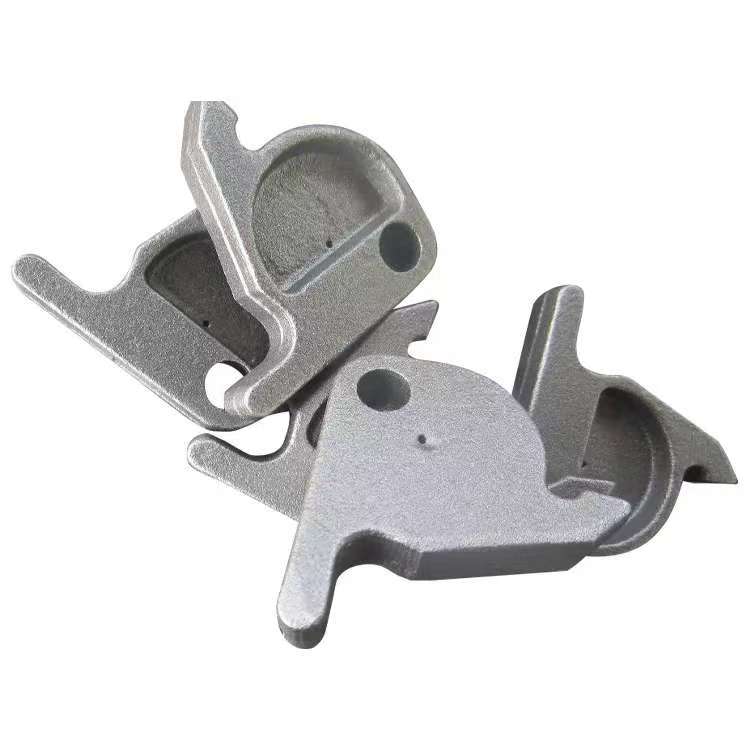
After forging, the part is cooled. The cooling rate can have a significant impact on the mechanical properties of the part. Slow cooling, for example, can result in a more ductile part, while rapid cooling can increase the hardness of the part.
Finally, the forging part may undergo additional processing steps such as machining, heat treatment, and surface finishing. Machining is used to achieve the final dimensions and surface finish of the part. Heat treatment is used to improve the mechanical properties of the part, such as hardness and strength. Surface finishing is applied to protect the part from corrosion and to enhance its appearance.
Quality Control in Forging Part Production
Quality control is an essential aspect of forging part production. As a forging part supplier, we implement strict quality control measures at every stage of the manufacturing process. We start by inspecting the raw materials to ensure they meet the required specifications. This includes checking the chemical composition, mechanical properties, and surface quality of the materials.
During the forging process, we monitor the forging temperature, pressure, and other process parameters to ensure consistent quality. Non - destructive testing methods such as ultrasonic testing and magnetic particle testing are used to detect internal defects in the forging parts.
After forging, the parts are inspected for dimensional accuracy and surface finish. We use precision measuring instruments such as calipers, micrometers, and coordinate measuring machines (CMMs) to ensure that the parts meet the design requirements.
Applications of Forging Parts
Forging parts are used in a wide range of industries. In the automotive industry, forging parts are used in engines, transmissions, and suspension systems. Engine components such as crankshafts, connecting rods, and camshafts are typically forged to ensure high strength and reliability.
In the aerospace industry, forging parts are used in critical applications where weight reduction and high strength are essential. Forging parts such as landing gear components and turbine blades are made from high - strength alloys to withstand the extreme conditions of flight.
The construction industry also relies on forging parts. For example, forged bolts, nuts, and brackets are used in building structures to provide strong connections. These forging parts are designed to withstand heavy loads and harsh environmental conditions.
Why Choose Our Forging Parts
As a forging part supplier, we offer several advantages to our customers. Firstly, we have a team of experienced engineers and technicians who are experts in the forging process. They can work closely with our customers to understand their specific requirements and develop customized forging solutions.
Secondly, we have state - of - the - art forging equipment and manufacturing facilities. Our equipment is regularly maintained and upgraded to ensure high - quality production. We also have a well - established quality control system to ensure that every forging part we produce meets the highest standards.
Finally, we offer competitive pricing and fast delivery times. We understand the importance of cost - effectiveness and timely delivery in today's competitive market. We strive to provide our customers with the best value for their money.
Contact Us for Forging Part Procurement
If you are in need of high - quality forging parts, we invite you to contact us for procurement discussions. Our team is ready to assist you with any questions you may have and to provide you with detailed information about our products and services. Whether you are looking for a standard forging part or a custom - designed solution, we have the expertise and resources to meet your needs.
References
- ASM Handbook Volume 14A: Metalworking: Forging. ASM International.
- Dieter, G. E. (1988). Mechanical Metallurgy. McGraw - Hill.
- Kalpakjian, S., & Schmid, S. R. (2008). Manufacturing Engineering and Technology. Pearson Prentice Hall.