




What are the forging part production quality control process validations?
 Dec 02, 2025|
 As a forging part supplier, I've been deeply involved in the industry for quite some time. One of the most crucial aspects that we always focus on is the production quality control process validations. In this blog, I'll share with you what these validations are all about and why they matter so much in our business.
Understanding the Basics of Forging Part Production
Before diving into the quality control process validations, let's quickly go over what forging part production is. Forging is a manufacturing process where metal is heated and then shaped by applying compressive forces. There are different types of forging, like open die forging and drop forging. For example, we produce Open Die Forging Shaft using open die forging techniques. This method allows us to create shafts with different shapes and sizes according to our customers' requirements. Another product we offer is the Drop Forged Bracket, which is made through drop forging. This process is great for making brackets with high strength and good dimensional accuracy.
Why Quality Control Process Validations Are Necessary
Quality control process validations are like the safety net in our forging part production. They ensure that every part we make meets the required standards and specifications. If we don't have proper validations in place, we might end up producing parts that are defective or don't perform as expected. This can lead to a lot of problems, such as customer dissatisfaction, product recalls, and even legal issues. So, by validating our quality control processes, we can prevent these issues from happening and maintain a good reputation in the market.
The Steps in Forging Part Production Quality Control Process Validations
Raw Material Inspection
The first step in the validation process is to inspect the raw materials. We need to make sure that the metal we're using is of the right quality and composition. We check things like the chemical properties, hardness, and grain structure of the raw material. For instance, if we're making High - Precision Metal Components, we need to use high - quality raw materials to ensure the final product has the required precision. We use various testing methods, such as spectroscopy and hardness testing, to verify the quality of the raw materials.
Process Parameter Monitoring
During the forging process, we need to monitor the process parameters carefully. These parameters include things like temperature, pressure, and forging speed. For example, if the temperature is too high or too low during the forging process, it can affect the quality of the part. We use sensors and monitoring systems to keep track of these parameters in real - time. If any parameter goes out of the specified range, we can take immediate action to correct it. This helps us ensure that the forging process is consistent and that the parts are being made to the right specifications.

Dimensional Inspection
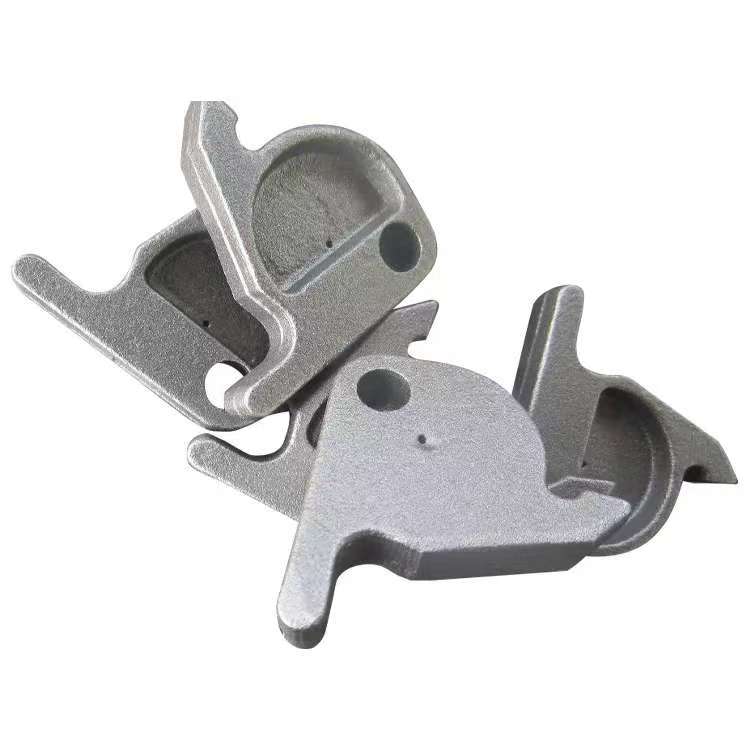
After the forging process is complete, we need to check the dimensions of the part. We use measuring tools like calipers, micrometers, and coordinate measuring machines (CMMs) to measure the length, width, height, and other dimensions of the part. The part must be within the specified tolerance range. For example, if a part has a specified length of 100 mm with a tolerance of ±0.1 mm, we need to make sure that the actual length of the part is between 99.9 mm and 100.1 mm. Dimensional inspection is crucial, especially for parts that need to fit together with other components in a larger assembly.
Non - Destructive Testing (NDT)
Non - destructive testing is another important part of the quality control process validations. NDT methods allow us to detect internal defects in the part without damaging it. We use methods like ultrasonic testing, magnetic particle testing, and X - ray testing. Ultrasonic testing is great for detecting internal cracks and flaws in the metal. Magnetic particle testing is used to detect surface and near - surface defects in ferromagnetic materials. X - ray testing can be used to see inside the part and detect any hidden defects. By using NDT, we can identify and reject parts with internal defects before they are shipped to the customers.
Final Visual Inspection
The final step in the quality control process is the visual inspection. We carefully examine the part for any surface defects, such as cracks, scratches, or porosity. We also check the overall appearance of the part to make sure it meets the customer's requirements. A visual inspection might seem simple, but it can catch a lot of issues that other testing methods might miss. For example, a small surface crack that is not detected by NDT might be visible during a visual inspection.
Documentation and Record - Keeping
Throughout the quality control process validations, we need to keep detailed documentation and records. This includes things like test results, inspection reports, and process parameter data. These records serve as evidence that we have followed the quality control processes and that the parts meet the required standards. In case of any quality issues or customer complaints, we can refer to these records to investigate the problem and take appropriate action.
Continuous Improvement
Quality control process validations are not a one - time thing. We need to continuously improve our processes based on the results of the validations. If we find that a particular testing method is not effective or that a process parameter needs to be adjusted, we make the necessary changes. We also collect feedback from our customers and use it to improve our products and processes. By continuously improving our quality control processes, we can stay competitive in the market and provide our customers with better - quality forging parts.
Conclusion
In conclusion, forging part production quality control process validations are essential for us as a forging part supplier. They help us ensure that the parts we produce are of high quality, meet the required standards, and satisfy our customers. From raw material inspection to final visual inspection, every step in the quality control process plays a crucial role in maintaining the quality of our products.
If you're in the market for high - quality forging parts, I encourage you to get in touch with us for a procurement discussion. We have the expertise and the quality control processes in place to provide you with the best forging parts for your needs.
References
- ASM Handbook Volume 14A: Metalworking: Forging.
- ASTM International standards related to forging and metal testing.
- ISO 9001:2015 Quality management systems — Requirements.