




What are the disadvantages of sand casting?
 Oct 22, 2025|
 As a supplier in the sand casting industry, I've witnessed firsthand the widespread use and numerous advantages of sand casting. It's a versatile and cost - effective method for producing a wide range of metal parts, from Large Sand Cast Iron Base to Sand Casting Components and Machined Sand Casting Parts. However, like any manufacturing process, sand casting is not without its drawbacks. In this blog post, I'll delve into the disadvantages of sand casting, providing you with a comprehensive understanding of the limitations associated with this popular technique.
Surface Finish
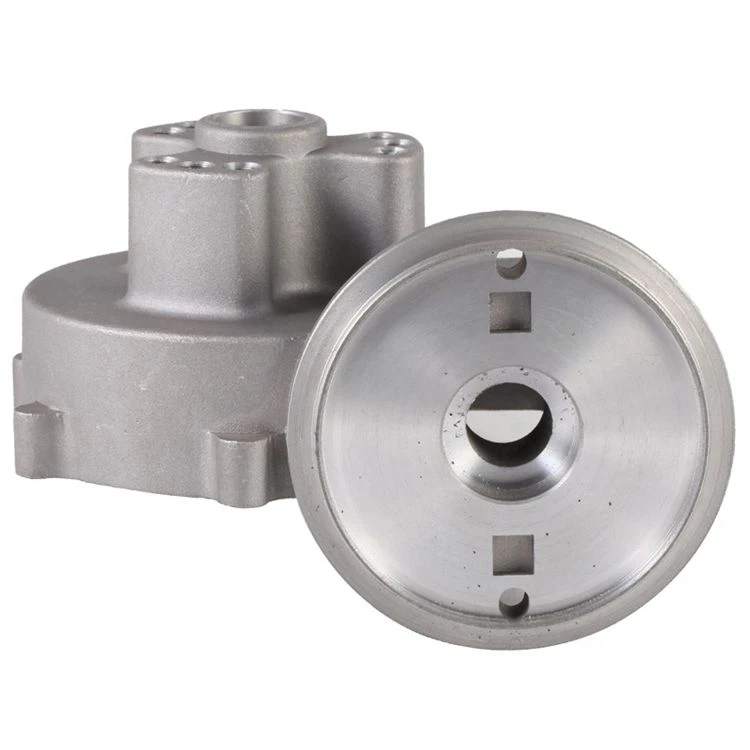
One of the most significant disadvantages of sand casting is the relatively poor surface finish of the cast parts. Sand casting involves pouring molten metal into a sand mold, and the texture of the sand grains is often transferred to the surface of the casting. This results in a rough and uneven surface, which may require additional finishing operations such as grinding, polishing, or machining to achieve the desired smoothness. These secondary operations not only add to the production time but also increase the overall cost of the parts.
For high - precision applications where a smooth surface finish is crucial, such as in aerospace or automotive components, the rough surface finish of sand - cast parts can be a major drawback. The irregularities on the surface can lead to increased friction, wear, and potential leakage in fluid - handling systems. Additionally, the rough surface may not be aesthetically pleasing, which can be a concern for consumer products.
Dimensional Accuracy
Another limitation of sand casting is its relatively low dimensional accuracy compared to other casting methods such as investment casting or die casting. The sand molds used in sand casting are subject to shrinkage and expansion during the casting process, which can cause variations in the dimensions of the final parts. The amount of shrinkage depends on several factors, including the type of metal being cast, the design of the part, and the properties of the sand mold.
These dimensional variations can be a problem in applications where tight tolerances are required. For example, in the manufacturing of engine components or mechanical assemblies, even small deviations from the specified dimensions can lead to improper fit, reduced performance, and potential failure. To compensate for the dimensional inaccuracies, additional machining operations may be necessary, which further increases the cost and production time.
Porosity and Defects
Porosity is a common defect in sand - cast parts. During the casting process, gases can become trapped in the molten metal, resulting in the formation of pores or voids within the casting. These pores can weaken the mechanical properties of the parts, reducing their strength, ductility, and fatigue resistance. Porosity can also affect the surface finish and dimensional accuracy of the parts, as well as their corrosion resistance.
In addition to porosity, sand casting can also be prone to other defects such as sand inclusions, cold shuts, and misruns. Sand inclusions occur when sand particles become embedded in the casting, which can cause surface irregularities and reduce the integrity of the part. Cold shuts are formed when the molten metal fails to fuse properly, resulting in a weak joint in the casting. Misruns happen when the molten metal does not completely fill the mold cavity, leaving incomplete or defective parts.
The presence of these defects can significantly reduce the quality and reliability of the sand - cast parts. To detect and eliminate these defects, non - destructive testing methods such as X - ray inspection, ultrasonic testing, or dye penetrant inspection may be required. These testing procedures add to the cost and complexity of the production process.

Limited Production Rate
Sand casting is generally a slower production process compared to other manufacturing methods. The preparation of the sand molds is a labor - intensive and time - consuming process. Each mold needs to be carefully crafted, and the sand mixture must be properly prepared to ensure the quality of the mold. After the casting is completed, the mold needs to be broken apart to remove the part, and then a new mold must be made for the next casting.
This slow production rate makes sand casting less suitable for high - volume production. For large - scale manufacturing, where a high number of parts need to be produced in a short period, other casting methods such as die casting or continuous casting may be more appropriate. The limited production rate of sand casting can also lead to longer lead times, which may not be acceptable for customers with tight production schedules.
Environmental Impact
The sand casting process has a significant environmental impact. The production of sand molds requires large amounts of sand, which is a non - renewable resource. The extraction of sand can cause environmental damage, such as soil erosion, habitat destruction, and water pollution. Additionally, the use of binders and additives in the sand mixture can release harmful chemicals into the environment during the casting process.
The disposal of used sand molds also poses an environmental challenge. The spent sand contains various contaminants, including metals, binders, and additives, which can leach into the soil and groundwater if not properly managed. Recycling the used sand can be a complex and costly process, and in many cases, a large portion of the spent sand ends up in landfills.
Material Limitations
Sand casting is suitable for a wide range of metals, including iron, steel, aluminum, and bronze. However, there are some limitations in terms of the types of alloys and materials that can be effectively cast using this method. Some high - strength or heat - resistant alloys may be difficult to cast in sand molds due to their high melting points and reactivity with the sand.
For example, certain superalloys used in aerospace applications require precise control of the casting process to achieve the desired microstructure and properties. Sand casting may not be able to provide the necessary conditions for casting these advanced alloys, and other specialized casting methods may be required.
Conclusion
Despite its many advantages, sand casting has several significant disadvantages that need to be considered when choosing a manufacturing process. The poor surface finish, low dimensional accuracy, porosity and defects, limited production rate, environmental impact, and material limitations can all pose challenges in different applications.
However, it's important to note that sand casting still has its place in the manufacturing industry. It is a cost - effective method for producing large - size parts, complex shapes, and low - volume production. By understanding the disadvantages of sand casting, manufacturers can make informed decisions about whether this process is suitable for their specific needs.
If you're considering using sand - cast parts for your project, I encourage you to contact me to discuss your requirements in detail. We can work together to find the best solutions to overcome the potential challenges associated with sand casting and ensure the production of high - quality parts that meet your specifications. Whether you need Large Sand Cast Iron Base, Sand Casting Components, or Machined Sand Casting Parts, I'm here to assist you with your procurement needs.
References
- Campbell, J. (2003). Castings. Butterworth - Heinemann.
- Kalpakjian, S., & Schmid, S. R. (2009). Manufacturing Engineering and Technology. Pearson Prentice Hall.
-ASM Handbook Committee. (2008). ASM Handbook, Volume 15: Casting. ASM International.