




Can a cast iron pulley be used in a marine environment?
 May 12, 2026|
 Can a cast iron pulley be used in a marine environment? Well, that's a question I've gotten a lot as a cast iron pulley supplier. Let's dig into this topic and see if cast iron pulleys are a good fit for the tough conditions of the marine world.
First off, let's talk about what makes the marine environment so challenging. The ocean is a harsh place. There's constant exposure to saltwater, which is extremely corrosive. Saltwater contains ions that speed up the corrosion process of metals. On top of that, there are high humidity levels, strong winds, and the possibility of physical impacts from waves or debris. All these factors can take a toll on any equipment used in the marine setting.
Now, let's look at cast iron pulleys. Cast iron is a widely - used material for pulleys because it's relatively inexpensive, easy to cast into different shapes, and has good wear resistance. It can handle heavy loads and is commonly used in various industrial applications. You can check out our Cast Iron Pulley page to see the different types we offer.
But when it comes to the marine environment, cast iron has some major drawbacks. Corrosion is the biggest issue. Cast iron is prone to rusting when exposed to saltwater. Rust not only affects the appearance of the pulley but also weakens its structure. As the rust eats away at the metal, it can reduce the strength of the pulley, leading to potential failure. And in a marine application, a pulley failure can be a real headache, causing downtime and potentially dangerous situations.
Another problem is the brittleness of cast iron. In a marine environment, there's always a risk of the pulley getting hit by something, like a piece of floating debris. Cast iron is more brittle compared to some other materials, so it's more likely to crack or break upon impact. This is a significant concern, especially in applications where the pulley needs to operate reliably for long periods.
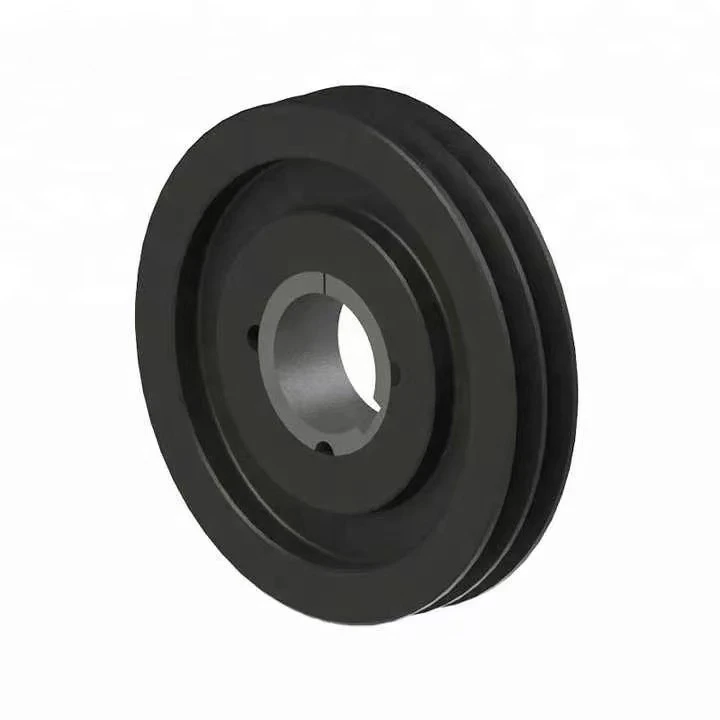

However, that doesn't mean cast iron pulleys can never be used in a marine environment. There are ways to mitigate the problems. One option is to apply a protective coating to the cast iron pulley. Coatings like epoxy or zinc - based paints can act as a barrier between the metal and the saltwater, reducing the rate of corrosion. But these coatings need to be properly applied and maintained. Over time, the coating can get damaged, exposing the cast iron underneath to corrosion.
Regular maintenance is also crucial if you decide to use cast iron pulleys in a marine setting. You need to inspect the pulleys frequently for signs of rust or damage. If you spot any issues early, you can take steps to address them, like repainting the coating or replacing the pulley if it's too damaged.
In some less - demanding marine applications, cast iron pulleys might be a viable option. For example, in small boats or in areas where the exposure to saltwater is limited, the risks might be more manageable. But for large ships or critical systems, other materials might be a better choice. Stainless steel pulleys, for instance, are much more resistant to corrosion and are often used in high - end marine applications.
If you're still considering using cast iron pulleys in your marine project, you might also want to look at our Industrial V Groove Pulley and Dual Groove Belt Pulley options. These pulleys are designed to meet different industrial needs and can be customized to some extent.
In conclusion, while cast iron pulleys have their advantages in terms of cost and wear resistance, using them in a marine environment is a bit of a double - edged sword. The corrosion and brittleness issues are real concerns, but with proper coating and maintenance, they can be used in some situations. If you're unsure whether cast iron pulleys are right for your marine project, I'd be happy to have a chat with you. We can discuss your specific requirements and see if we can come up with the best solution. Whether it's a cast iron pulley or another type of pulley, we're here to help you make the right choice for your application. So don't hesitate to reach out if you have any questions or if you're interested in purchasing our pulleys. Let's work together to find the perfect pulley for your marine needs.
References
- ASM Handbook Volume 13B: Corrosion: Materials. ASM International.
- Marine Engineering: Principles and Practice. Butterworth - Heinemann.